
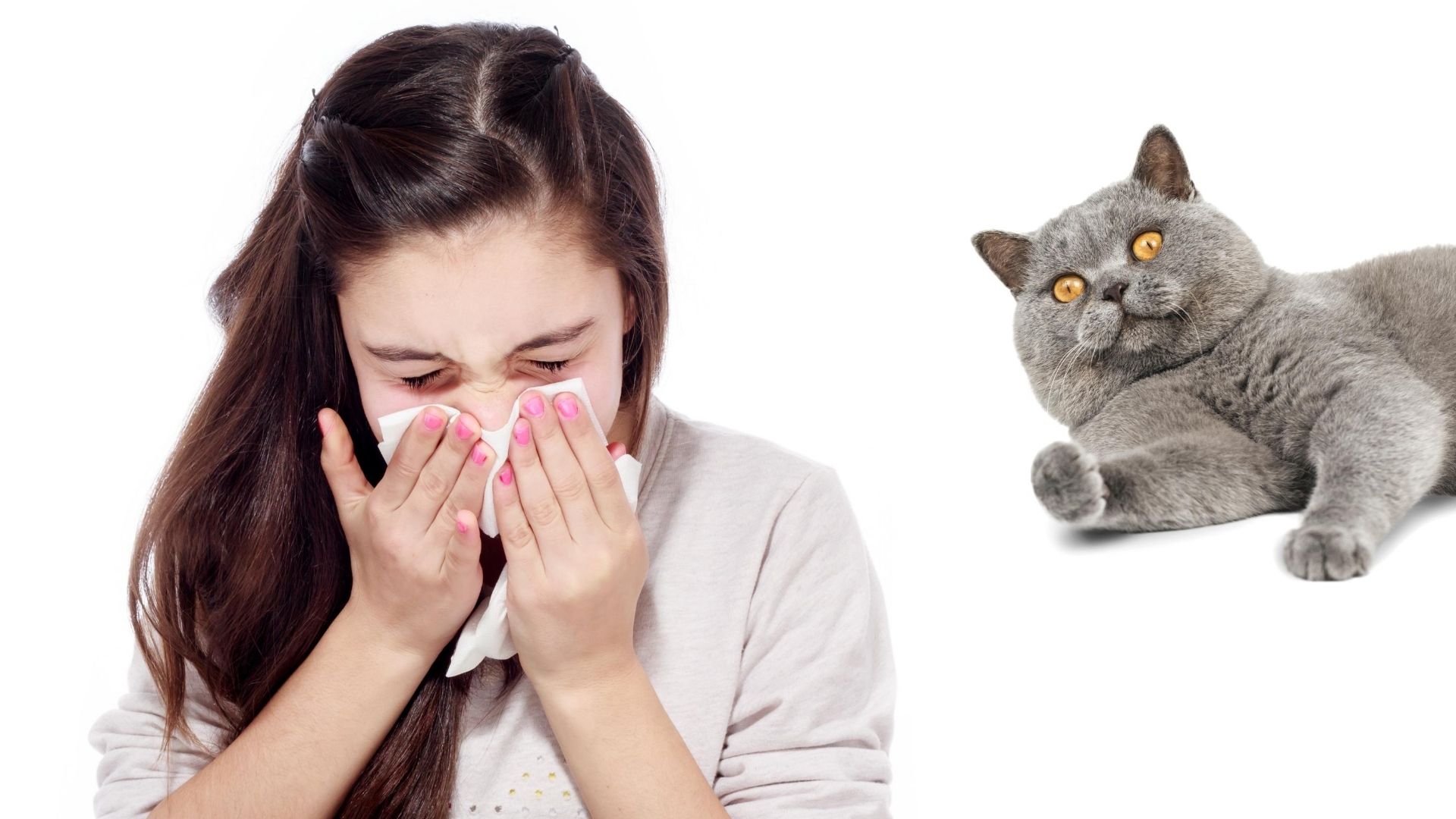

The so-called “cat allergy” is the most common reason why people dreaming of owning a kitten finally decide not to. It can also happen that the symptoms of allergy appear only after buying a meowing puppy, which puts the owner – and above all the animal – in a very difficult situation. However, you may come across the opinion that there are breeds of cats friendly to allergy sufferers. The beautiful “Briton” is always on this short list. Is the British cat really a good idea for an allergy sufferer? You will find out everything from our article.
Contents
Allergies to Cats?
First of all, let’s dispel the myth that “cats cause allergies.” It’s not the cats themselves that are the allergen, it’s a protein in their saliva called Fel d 1. This protein is very allergenic, and people who live with cats are not able to completely avoid contact with it.
Kot leaves protein on everything it touches with its tongue. This can be furniture, upholstery, carpets, floors, kitchen countertops, clothing, and hundreds of other things. Of course, the largest concentration of Fel d 1 will be found on a cat’s fur – each mruczek spends even several hours a day licking it.
When someone who is allergic to the protein (which is a very strong allergen) pets a cat and then, for example, scratches their face, they will quickly notice the allergy symptoms: burning skin, watering eyes, runny nose, sneezing, throat-clearing, rash, etc.
Every cat is an allergy trigger
One popular myth that’s worth dispelling right away is that there’s such a thing as a hypoallergenic cat. Even hairless cats like the popular Sphynx can spread the Fel d 1 protein around to all the objects they drool on.
However, it is a fact that some cat breeds are more allergy-friendly than others. This includes not only hairless cats, but also those with short fur and little shedding. This also applies to our article’s hero, the British Shorthair.
Why a British Shorthair is good choice for an allergy sufferer!
The reason is simple: British Shorthairs (as only these can be taken into consideration by people with allergies to Fel d 1 protein) have a very dense coat which doesn’t require such intensive care. “Britishies” not only lick themselves less often, but also leave much less hair on the floor. Consequently, it reduces the contact of the person with the allergenic protein.
Not only that, during shedding season British Shorthair cats lose less fur than, for example, Persians. They are therefore less troublesome in terms of keeping the house clean, which is also very advantageous for an allergy sufferer.
It is also worth noting that British Shorthairs have a very reserved, even withdrawn nature. They don’t like to get close to humans, they don’t demand constant petting, and they don’t like being picked up. This obviously minimizes contact with the allergen.
To sum up: a British Shorthair for an allergy sufferer is really a good idea, but we still suggest that you do a simple test and look for contact with a representative of this breed before making a final decision. Maybe one of your friends has a “Brit”? Maybe there is a local breeding of these beautiful cats whose owner will let you spend time with the kittens for a few minutes? It’s worth a try so you don’t regret reaching for another tissue later…
