
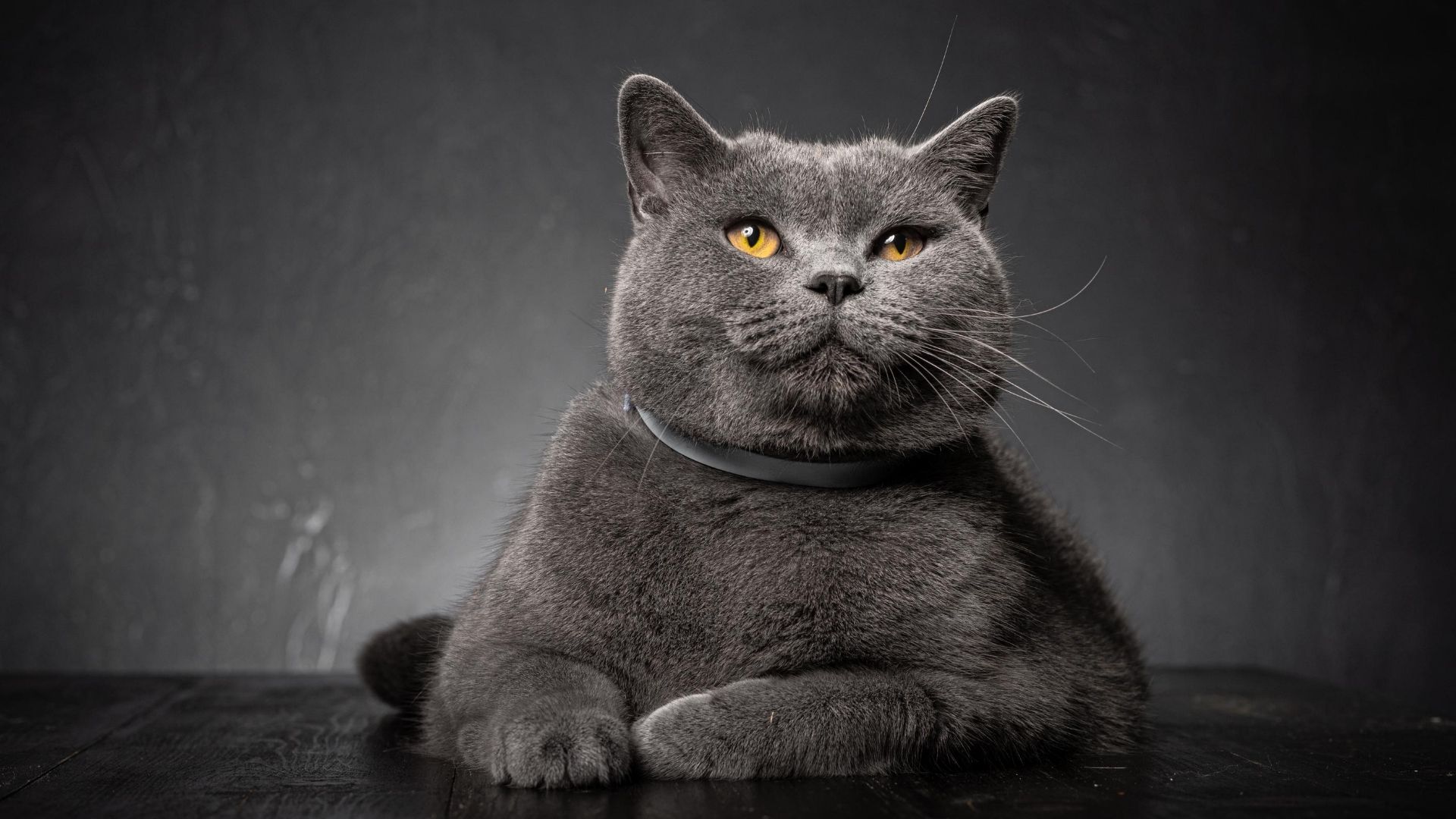
British cat – opinions about the breed. Where do the negative ones come from?

The British Shorthair is one of the three most popular breeds of house cats in our country, alongside the Russian Blue and the Ragdoll. They are known to be easy to care for, emotionally stable, and not requiring a lot of time and attention. The opinions of British Shorthairs that can be found online are mostly positive. However, there are also some that are less favorable. Why might this be the case? Why are some owners disappointed with their “Brit”?
Contents
Negative reviews of British Shorthairs: the result of a hasty purchase
It is hard to find another breed of cat that is as easy to take care of as British Shorthairs. They are animals that can be blindly recommended to anyone who is looking for an uncomplicated pet that also looks beautiful. British Shorthairs are also an ideal choice for those people who, due to lack of time, work late and frequent trips, cannot fully devote themselves to their cat.
Characteristic of British cats is that they give the impression that the presence of the owner or other household members is completely indifferent to them. It is of course not true that the “Briton” is alienated, does not need closeness with a man at all and does not participate in family life. Surely, however, he is not as emotional as, for example, the aforementioned ragdoll. For some it will be a great advantage, for others a serious disadvantage.
Many people buy a British Shorthair cat on a whim, drawn in by its–admittedly–stunning looks. They don’t bother to learn about the breed’s characteristics or whether its temperament will suit them, and it’s not long before they realize their dream cat isn’t the great companion they thought it would be. Families with young children are the most likely to find themselves in this situation.
Is the British Shorthair the perfect cat for kids? Not quite…
What’s notable is that the negative opinions about British Shorthair cats mostly come from parents of small children. They complain on the internet that their mewing pet completely doesn’t want to play with their offspring, that it hides in corners, that it doesn’t want to get down from its favorite cabinet, and that it completely ignores the child’s affection, which drives the kid to tears. There wouldn’t be any such complaints if the parents, before getting a British Shorthair cat as a pet, had thoroughly read the description of the breed.
Despite its teddy bear-like appearance (and the fact that it feels like one when you touch its beautiful fur), the British Shorthair is not a suitable child’s toy. Why? Because it hates being picked up and held. This is one of the few things that can trigger aggression in a “Brit” – although it should be noted that representatives of this breed very rarely show aggressive behavior.
The child does not necessarily understand this. They constantly try to take their beloved “teddy bear” in their arms, hug it, often doing so forcefully and clearly against the animal’s will. The outcome is easy to predict. The cat rebels, remembers that this little human caused it pain, and later consistently avoids contact with the child.
We should also remember that British cats are very intelligent – that’s why they can find really effective ways to avoid having to deal with an aggressive child. It’s not uncommon for members of this breed living in homes with children to find a hideaway and not come out of it until the child is safely out of range (e.g. goes to school or goes outside).
In addition to this, the British Shorthair cat’s deeply ingrained need for independence makes it so that they decide when it is time for affection. You cannot force them into it, because the effect will be exactly the opposite of what you intended. Even though British Shorthair cats very easily adapt to new environments, it is much harder to gain their trust – you cannot achieve this by acting against their natural character traits.
In conclusion, negative opinions about British cats arise solely from a lack of understanding or basic knowledge about the breed. If you’re looking for a lapdog that will constantly beg for playtime, jump on your lap, express love in the most creative ways, and become your child’s best friend, you’re better off choosing a Ragdoll. A British Shorthair is only for those who, like them, value peace and slow life.
