
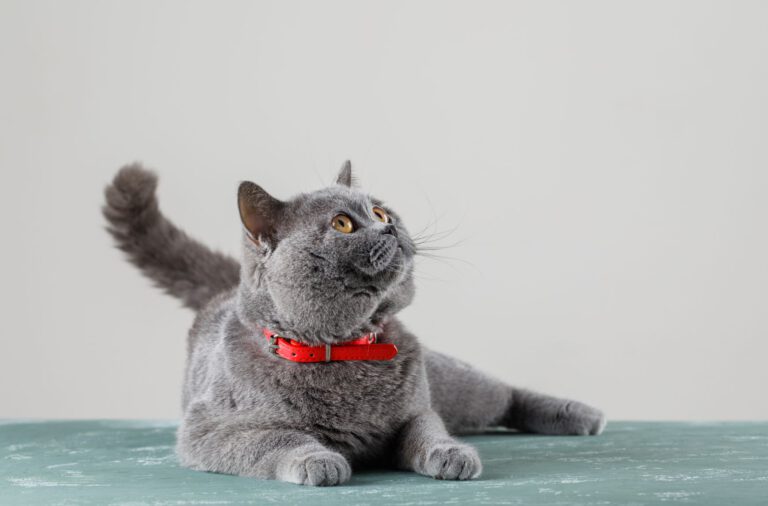

The British Shorthair is a very popular breed of cat. This is because they are very good looking, especially in the classic blue color. They also have large, amber eyes and a very soft coat. If you have decided that you want one of these cats in your home, our guide will help you take your first steps in breeding British Shorthairs. Check out the rules below that you should follow.
Contents
British Shorthair – Weight Control
Cats of the British persuasion have a tendency to put on weight. This is due to both their massive body build and their unwillingness to take part in physical activity as well as their love of food. Many owners of “Brits” jokingly refer to their pupils as gluttons. Therefore, the most important thing you should take care of is consistency in feeding your British cat.
Talk to the breeder from whom you are buying the cat about the diet recommended by him. You can also consult a veterinarian – this will be indicated especially when the food you are feeding your pet is obviously not good for him (allergic reaction, digestive problems). You should also weigh your British cat regularly to maintain a healthy weight.
Respecting the Character of the British Shorthair Cat
Although British Shorthairs look like super cuddlers, they’re actually not that keen on being cuddled and petted all the time. Representatives of this breed have very reserved character. They look like they don’t need human company at all – which doesn’t mean that the cat can be left alone for days and nobody has to take care of it.
However, it is important not to try to change the character of the murmur by force. British Shorthairs can fall in love with the owner very much, but they are also very sensitive to any manifestation of aggression towards them – even verbal. Because of their outstanding intelligence, an offended cat can easily avoid contact with an disliked owner and make it clear to him that he will not be his cuddler.
Advice
This is particularly important for families with small children, for whom a British Shorthair cat might not be the best choice.
Get your British Shorthair moving with these tips!
British Shorthairs are not the type of athletes. They prefer slow life, laziness, they don’t make unnecessary movements, they love to lounge on the couch and contemplate their existence. Despite this, we recommend that every owner tries to activate their mruczek.
It doesn’t have to be a walk on a leash right away, but playing catch with a rubber mouse is just as good. The more movement the “Brit” has, the less risk of obesity. Playing together is also a great way to break the natural distance for this breed.
Don’t forget to schedule your kitty’s vet appointments!
They are important because they allow to timely detect one of the typical diseases for this breed. Unfortunately, their list is quite long and the consequences of ignoring the first symptoms can be very serious. The characteristic diseases of British cats include:
- Hypertrophic cardiomyopathy is a condition where the walls of the heart muscle thickens, leading to fluid buildup in the lungs and potentially death. Interestingly, this disease is also diagnosed in very young cats.
- Polycystic Kidney Disease – This disease is characterized by the formation of cysts on the kidneys and is typical of the British Shorthair breed. The preventive measure is to ensure that the cat drinks plenty of water.
- Nasolacrimal duct obstruction – The first symptom of the disease is the accumulation of a large amount of liquid pus around the eyes and on the muzzle. Fortunately, this can be dealt with quite easily by performing a procedure to flush the tear ducts and regularly wipe the pup’s eyes.
- Hair accumulation in the feline digestive system – This particularly affects British Shorthairs, which are prone to developing hairballs (hair balls) in their digestive tract. This can lead to constipation and very serious digestive problems.
- Hemophilia – This disease only affects tomcats. It has a dramatic course, because it manifests itself in bruising and bleeding from the nose, eyes
By following these simple British Shorthair breeding rules and adding proper care (regular brushing, trimming nails, and cleaning ears) you will create very good conditions for your pet, leading to a long and happy life. Fingers crossed!

Comments are closed.