


There are certain breeds of cats that are, by design, very high-maintenance when it comes to grooming. Examples include the Persian cat, the Norwegian Forest cat, and the Maine Coon. The Bengal cat, however, is generally considered to be low-maintenance and even recommended for people who can’t stand the sight of hair on the floor. So, what are the basic grooming rules for a Bengal cat? You’ll find out in our guide.
Contents
Bengal Cat Grooming: Brushing & Combing
The Bengal cat has very characteristic fur which resembles that of a leopard. Although beautiful, it turns out to be low-maintenance in terms of grooming. All it takes is weekly brushing and combing to remove dead hair. Bengals love this because it means they can be very close to their owner, so it’s worth taking advantage of. We use a brush with metal teeth, and then finish with a brush with soft hair – this will give the cat’s fur a glossy finish.
Brushing frequency should only be increased during shedding season. Then the procedure is carried out two to three times a week, depending on needs. Not only will this prevent fur from accumulating on the floor, but it will also eliminate the risk of hair balls forming in the digestive system of your cat, which causes painful bowel movements.
Pet Facts!
We also have available very convenient to use cleansing wipes for cat fur, which additionally moisturize the hair and make it shiny.
The Bengal cat’s short coat is undoubtedly one of the most important grooming advantages. It frees the owner from the obligation of frequent dead hair removal, and also – what may be even more important for many people – limits the amount of hair on the floor, furniture or clothes.
Bathing and washing a Bengal cat
Cats that don’t go outside also need their fur and skin wet-washed from time to time, for which you should only use shampoos meant for animals. In the case of Bengal cats, the frequency of baths may be higher—this is because many owners regularly take their active mewers for a walk, and this contributes to their fur and paws getting dirtier more quickly.
Luckily, Bengal cats are one of the select few breeds of cats that actually love water. So, there shouldn’t be a problem convincing your Bengal to jump in the bath or shower with you, as long as you start acclimating them to it when they’re kittens. You can even give your Bengal a bath once a month.
Caring for the claws of the Bengal cat – clipping
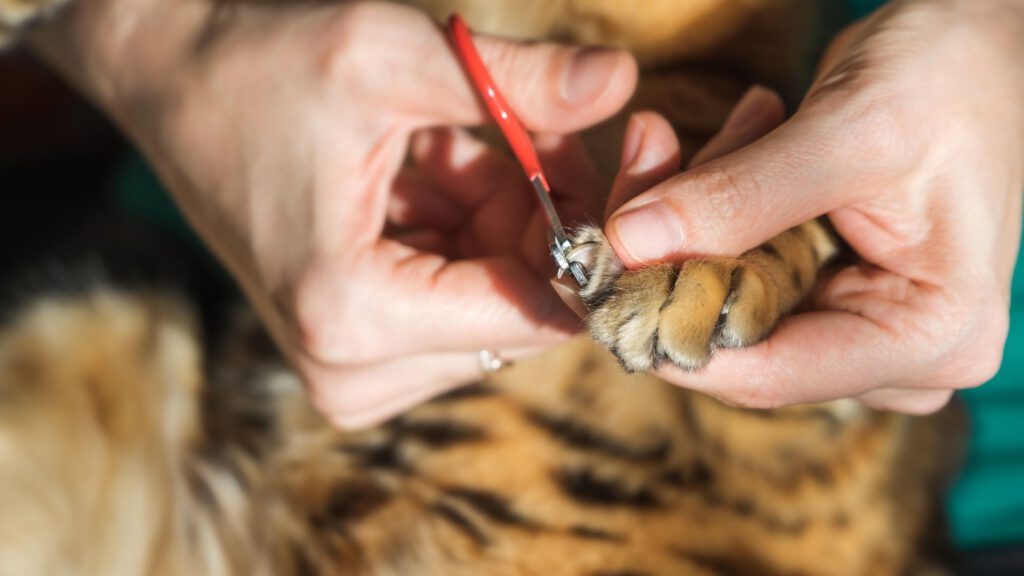
Bengal cats exhibit numerous behaviors that point to their wild origins. One example is the need to frequently sharpen their claws. If we don’t provide our little mruczek with a scratching post, sooner or later he’ll find another way to do it and probably become interested in our home furnishings.
Even a good scratching post won’t always keep your cat’s claws in good condition. Every once in a while, it’s worth trimming their nails by hand to prevent them from damaging your floor and furniture. It’s not a difficult process, but it’s best to go to a veterinarian the first time so that they can show you the proper technique.
The care of the Bengal cat is not only reduced to hygienic activities
It is much more important to follow the basic feeding rules for a Bengal cat, such as providing high-meat meals and carefully monitoring their intake. This is in addition to providing them with the strong need for socialization. Bengal cats do not tolerate loneliness and boredom well, so every owner must provide their pet with plenty of play, closeness, and activity – for example, by taking them on walks with a harness and a long leash.
We should also remember to secure our belongings when we leave our cat home alone. Don’t leave any loose or valuable items on tables or countertops. Close the drawers and cabinets. Be sure to close the windows and balcony doors, and remove any objects from the area that could be dangerous for the cat, like knives, household chemicals, etc.
